So how does a 3-D printer work?
3-D printing food (and 3-D printing in general) is a very hard thing to be able to understand. It requires very precise angles of attack when it comes down to building the objects in the 3-D printing process.
Today's blog is to show you how 3-D printers actually are able to 3-D print the objects that they are commanded to print.
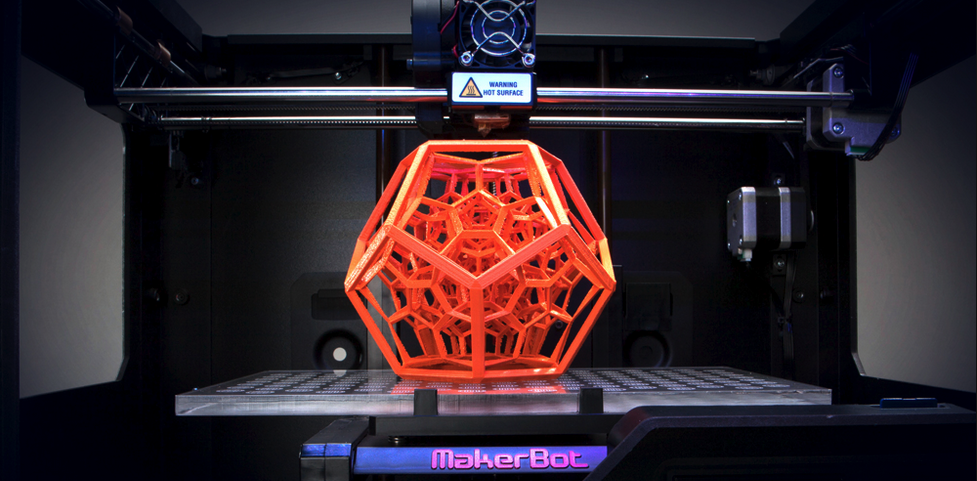
3-D printing, scientifically known as Additive Manufacturing is the process of stacking (adding) many 2-D layers on top of each other to make a 3-D object. The simplicity of 3-D printing an object depends on how many layers the object must have (which is why making something like a burger is very hard for a 3-D printer to do).

There are three methods that a 3-D printer can use to print objects and one of the three possible methods is programmed in the software of the printer's computer. The first method is to use a pool of chemicals that solidify when an infrared or ultraviolet light is shone upon it. The laser moves along a thin layer of liquid, drawing the required design.
A second method uses molten ink (or in some unique cases: chocolate or cheese!) that becomes solid when it emerges from the printer head. Designs are drawn by ink and again built up, layer by layer of 2-D shapes until the final product is complete.
The last method is to use layers of powdered material which are then heated to fuse the material together to translate the design into reality.
These processes of 3-D printing are carefully put into the software of the 3-D printer's computer system by the computer technicians that install the software onto the computer. My goal for my next blog is to find out more about how the instructions are put into the software of the 3-D printer's computer, or to make a long statement shorter, to find out more about the software of 3-D printer

